Showing posts with label Holiday. Show all posts

Saturday, October 15, 2011

Raise the roof (Leviticus 23:42-43)

The seventh and last appointed feast listed in Leviticus 23 is the Feast of Tabernacles. (The Tabernacle which translates to “dwelling place” was the portable holy place used in Israel’s exodus from Egypt prior to the building of the temple.) This feast is more commonly know as the Feast of Booth or Sukkot (literally meaning booths). For seven days, the “native-born Israelites” are to live in temporary structures reminiscent of the housing conditions experienced during Israel’s 40 years of wandering in the desert. Each family builds one of these booths where they will eat every meal and should spend as much time as possible including sleep.

Verse 40 commands to rejoice before God using four plants which have become known as the four species. In one hand you hold the etrog (a citrus fruit like a lemon). In the other is held a bundle of three types of branches known as the lulav which literally means palm, but that is only the largest of the three. The other two are the aravot (willow) and hadassim (myrtle). Each day of Sukkot a special prayer is recited with the four species in hand. This prayer is known as Hoshanot because it’s refrain is "Hosha na!" which translates to “Please save us!”


If your sukkah could pass for a 3-star hotel:

Saturday, October 8, 2011

PETA approved atonement (Leviticus 23:28)


In Jewish tradition, on Rosh Hashanah God writes down in a "book" (sometimes referred to as the Book of Life) the prospects of the next year for each person. During the next 10 days, Jews have the chance to reflect on their lives, repent, and atone for their shortcomings. The last day to appeal your entry in this "book" is on Yom Kippur which literally means Day of Atonement. People fast for 25 hours from sunset to sunset, refraining from any food or drink including water. Most of that time is spent in the synagogue for prayer. At the end of that day, the "books" are sealed.

While not all of these traditions are specifically written in the Bible, it loosely relates to the duties of the High Priest on the Day of Atonement as written in Leviticus 16. The High Priest performed multiple animal sacrifices to atone first for his sins and then for the sins of the nation for the coming year. Intermixed with these sacrifices, he cleansed himself through five ritual baths and four sets of special clothes. This is the only time of year anyone can enter the most holy part of the temple and only the High Priest may enter. And this isn’t like a frowned upon offense with a slap on the wrist. Two of Aaron sons, the first High Priest of Israel, were improperly making offerings and they were consumed by the fires their offerings (Leviticus 10:1-3).

So the immediate question is why don’t Jews do these animal sacrifices any more? The direction I’m most commonly pointed is that God set aside the Temple in Jerusalem as the only place to properly offer sacrifices (such as Deuteronomy 12:5). After the second temple was destroyed with little hope of return the Jewish leadership decided that there no longer was a proper place to make these offerings and as I mentioned in the previous paragraph, God is a stickler for the rules when it comes to proper sacrifices. Jews are waiting for the third Temple to be built in the Messianic Era before continuing the tradition of animal offerings. Their modern sacrifices are comprised of worship, prayer, and seeking after God. All of which are heavily featured on this day of atonement.


If you know why Don Drysdale said “I bet right now you wish I was Jewish, too.”

Wednesday, September 28, 2011

Happy new year! Again! (Leviticus 23:24)


In the seventh month of the Jewish calender (known as Tishri for you overachievers), the first two days are set aside to celebrate the new year. You may ask “How can you celebrate the start of the new year in the seventh month?” Well Judaism actually has four “new years” observances: counting the months (also for the reigns of kings), counting animal tithes, counting first-fruit tithes, and counting years.

This celebration is most commonly known as Rosh Hashanah which literly means the “head of the year,” but this name does not appear in the Bible. The Bible refers to it as the day or memorial with blowing of horns. And when Jews bring out the horns they don’t mess around. The specific horn is called a shofar which is typically made from a ram’s horn for religious purposes. There are four different notes that are played at the synagogue during this celebration. Rather that just explain them myself perhaps you should just hear them as performed by Zechrah. You should also check out Dennis McHugh cuz he’s a shofat-blowing beast.

Rosh Hashanah begins a time of introspection for the next ten days. This allows for the opportunity to repent before Yom Kippur. It’s the Jewish version of the new year’s resolutions with a lot more chutzpah!

For all you foodies out there, Rosh Hashanah is a time to eat apples dipped in honey. It represents the hope for a sweet new year.

As an interesting side note, the Bible designates only one day for Rosh Hashanah, but it is now celebrated for two. This is because timekeeping was difficult in the days of lunar calenders (basically eyeballing to see if the moon was full). The leaders would send messengers to declare a new month, but this is tricky for Rosh Hashanah since it starts at sundown on the first day of the month. Just to make sure they didn’t miss it, they celebrated both possible days.


If you double up on non-religious holidays:

Sunday, June 12, 2011

Happy Birthday, Church! (Acts 2:1-4)

The Christian version of Pentecost celebrates the day the Holy Spirit descended upon the disciples. Jesus talked about the importance of this event in John 16:1-15. He went so far as to say that it was better for him to leave so that he could send the Holy Spirit to be our advocate and counselor. However, one of the biggest tragic ironies of many Christian churches is that this day is pretty much breezed over (such an awful pun). We celebrate Mother’s Day like clockwork each and every year (Sorry, Mama, but you ain’t part of the Trinity), but Pentecost, the day that many consider to have kick-started the Christian Church, is lucky to get even a passing mention. 
 
Now that’s not so say everyone misses out. Most associated with Pentecost is the color red representing the joy and fire of the Holy Spirit. There’s also lots of imagery of the dove which is the most common visual representation of the Holy Spirit a la the story of Jesus’ baptism.
 
Perhaps the most interesting thing I have learned in researching Pentecost is that in the Middle Ages, Christian churches would be built with holes in the roof to let in the Holy Spirit. Not so good for keeping out the rain or wayward pigeon, but a great symbol for the inflowing of the presence of God. Now on Pentecost, as the biblical account was being retold, they would lower doves through these holes (either figurines or real doves) and the choir would make noises or play trumpets to represent the rushing of the great wind. After that they would drop rose petals or burning pieces of straw through the holes to represent the tongues of fire. Talk about showmanship. If we did that in church today, I bet more people would show up for Pentecost than Christmas or Easter. Just don’t forget your Pentecost poncho when the dove’s play poo-poo bombardiers. 
 
 
If you follow the literary allusions of King Arthur whereas on Pentecost “he would not go that day to meat until he had heard or seen of a great marvel”:

Tuesday, June 7, 2011

Make it grain! (Leviticus 23:15-16)

In Israel, the grain harvest began at Passover with the barley harvest and ended at Shavuot with the wheat harvest. (Don't forget that Passover is more accurately called Pesach by the Jews, but I kept forgetting so I'll stick to Passover in this post.) Shavuot means “weeks”, representing the seven weeks mandated by God to count the time from the Passover to Shavuot. Shavuot is known as the Festival of First Fruits (because it was the time of the year that the first fruits were brought to the temple as a sacrifice) and Pentecost (because it occurred 50 days after Passover. pentecost = 50th day) although it's not related to the Christian version of Pentecost. 

Shavuot is also known as Hag Matan Torateinu (the Festival of the Giving of Our Torah) because it celebrates the day the Israelites at Mount Sinai first received the Torah (a.k.a. the first five books of the Bible contain fundamental Jewish history and law), however, the connection between Shavuot and the Torah is not explicitly stated in the Bible. So while Passover celebrates the Jews freedom from earthly oppression, Shavuot celebrates freedom from spiritual oppression because of the guidance from God given in the Torah. This also means that the time from Passover to Shavuot, called the Counting of the Omer, is a time of spiritual preparation. 

The interesting thing about Shavuot is that it doesn't have any detailed rules set forth by the Torah beyond the standard no work, prayer time, and feast. Over time the following traditions were incorporated:
  • Reading the poem Akdamut (translated to “In Introduction to the Words”) on the first day complete with an all night study session on the Torah,
  • Eating dairy products (many different theories attempt to explain why),
  • and Reading the book of Ruth (the historical elements in the book relate to this harvest time),

If you procrastinate until the last minute to study for the Torah Test:

Monday, April 25, 2011

Stupid like a fox (1 Corinthians 2:9)

From the tract '10 Reasons Jesus Came to Die' by John Piper
#1) To give eternal life to all who believe on him

The above characters mimic the proverbial principle of the three wise monkeys. “See no evil, hear no evil, speak no evil.” The most simplified interpretation is that you should avoid doing evil things. This Japanese phrase has similar words to the Bible reference of Isaiah 64:4 but with a completely different spin. In the Bible the wording isn't about limiting yourself but about yourself being limited. Isaiah describes the senses of man as incapable of understanding the overwhelming love of God. God loved us so much that he sent his son to die for us so that we could have eternal life in heaven which is unimaginably perfect.

I scheduled this series to end on Easter (although it didn't quite work that way in reality) with this final post fitting perfectly into the Easter story. These ten reasons only scratch the surface of why the Jesus came to die.

But wait there's more to God's unfathomable stuff. What's the difference between Isaiah 64:4 and 1 Corinthians 2:9? Why did Paul reference this Old Testament verse? Because the rules had changed. After Jesus left for his much deserved break, he sent back the Holy Spirit. 1 Corinthians talks a lot about the wisdom and guidance provided by the Holy Spirit. Now, although mankind can't begin to imagine the wonders of God, we have the Holy Spirit to help reveal these mysteries.

In short, it's pretty stupid to think that some super-good guy who lived 2000 years ago personally loved you so much that he let himself be humiliated, beaten, tortured, and killed. It's even more stupid to think that three days later he used his superpowers and came back to life. Does any of that make any sense to you? If it does than you must be stupid...
...stupid with the Holy Spirit. The best kind of stupid.


If your dunce cap creates a lot of loud wind, fiery tongues , and makes you multilingual:

Monday, April 18, 2011

Staying Power (Deuteronomy 6:20-23)

It's difficult for me to talk about Pesach (something like PAY-sock), commonly known as/translated to Passover, because I feel so under qualified. The short version is that it's a celebration and remembrance of the Israelites freedom from slavery in Egypt. Of course that's about as descriptive as calling Christmas Jesus' birthday. It is the simplest description yet it barely scratches the surface.

Historically speaking, “pass over” refers to the final plague on Egypt where God killed the first-born of all Egyptians but passed over the Israelites who were unharmed. As part of Pesach there is also the “Feast of Unleavened Bread” (unleavened meaning without yeast which means the bread won't rise creating the flat matzah bread). On that night, the Israelites were instructed to eat with all there stuff packed up and ready to leave the next day. In Exodus 12:39, the bread was without yeast because they got out of Egypt so fast they didn't have time to prepare food for themselves.

I spent a lot of time reading up on all different traditions and customs of Pesach trying to figure out what to write down here. When I took it at face value Pesach was all about the Exodus, but I couldn't help but feel I was missing the big picture. It's hard to overlook the fact in the 3000+ years after they ran out on pharaoh, Jews have had to endure much worse than slavery. If the only example of antisemitism you know of is the Holocaust, you are sadly misinformed. Despite all this hatred, the Jewish culture has survived. This is where I read between the lines to take a stab at an underlying purpose of Pesach. Every part of the festival seems to symbolize endurance in the face of persecution with a focus on passing the knowledge on to the next generation. Although I've never had the pleasure of attending a Pesach seder, second-hand accounts seem to collaborate with my conclusions. I believe Pesach goes beyond the remembrance of a single historical event towards a celebration of Jewish culture as a whole. 

If you knew that the revival of the Hebrew language starting in the 19th century is the only example of an extinct language becoming an official national language with millions of first language speakers:

Tuesday, March 22, 2011

Kosher Carnival (Esther 9:20-22)

I've been so busy the past few weeks that I missed the festivities of Purim! It started on March 19th at sundown and went until the next day at nightfall. Well, more accurately if you live in a city that had walls in the time of Joshua it starts on the 15th day of Adar. For the cities that were wall-less it starts the previous day. The one exception being Jerusalem which didn't have walls at the time, but it gets a free pass because it's the big daddy. Why the difference? Your homework is to go read the whole book of Esther. I could give you the rundown here, but I can't do it justice in a few paragraphs. It's a sweet story and the primary celebration instructions are pretty much spelled out right in there. Besides, it's traditional to read the Book of Esther on Purim. (Some places have women read in honor of Esther. How 'bout that for progressive!) The part that interests me the most is that during the reading, the audience “blots out” the name of Haman (the bad guy) by making noise when it is read aloud. If you're counting, it happens 54 times.

 Near the end of the story, Mordecai instructs the Jews to celebrate and give out food and give to the poor. The Halakha (the collection of Jewish law) provides some additional clarification with instructions to give two different foods to one person and two charitable donations to those in need. Speaking of goodies, the traditional food of Purim is hamantash (supposedly resembling the ears of Haman). It's a pastry folded into the shape of a triangle and filled most traditionally with poppy seed but it could contain a variety of tasty foods.

And then there's the party. The day has a carnival atmosphere with masquerades and plays and such. Now I'm gonna say you should get wasted, but I have it second hand that the Talmud instructs people to drink until they can no longer distinguish between the phrases “arur Haman”, “Cursed is Haman,” and “baruch Mordechai”, “Blessed is Mordecai.” The favorable conservative opinion is to have a little more usual but you don't want to put yourself into an improper situation.
All in all it sounds like an awesome time and I'm sorry I missed it.


If you rattle your grager when you hear my name:

Monday, March 7, 2011

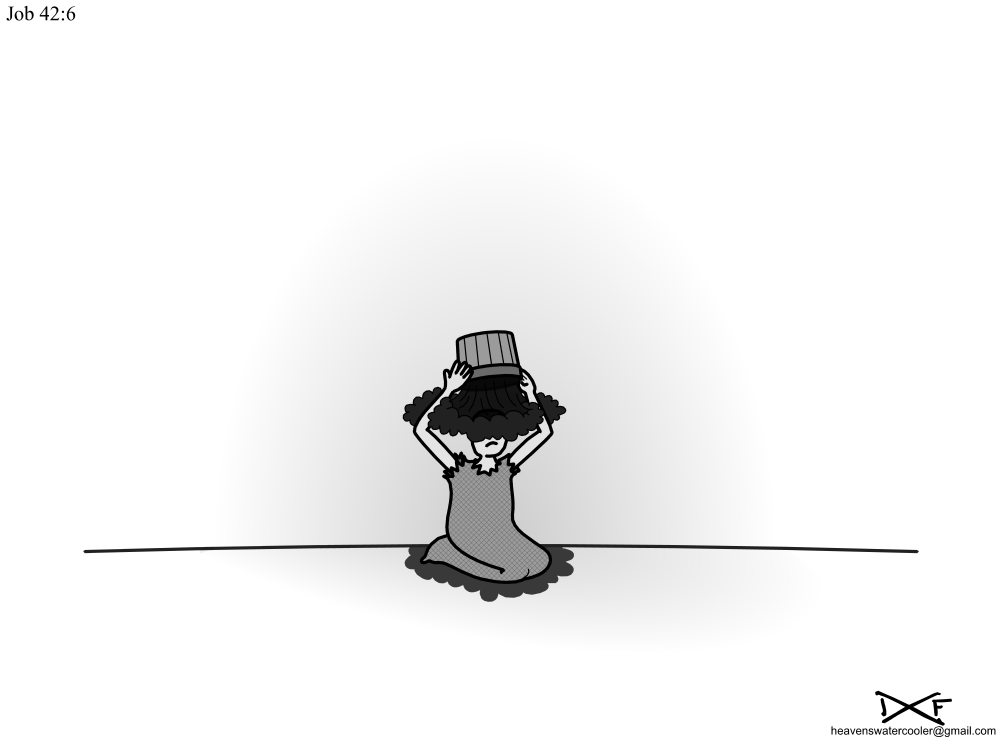
Ashes, ashes, we all fall down (Job 42:6)

Last year, if you would have asked me how I felt about Lent I bet I would have been less than supportive. One of my favorite arguments dealt with the history. They say that in 16th century England, a meat shortage coincided with a slumping fish industry. British parliament and the Catholic church got together to solve the problem with the idea of meatless Fridays during Lent (excluding fish). The whole idea is based off of economics and politics and thus I turned up my nose.
 
If I could travel back in time to see that version of myself, I would ask him “What did the five fingers say to the face? SLAP!” If you work off this premise of strictly following only the Biblical procedures for Christian holidays, what are you left with? Off the top of my head the only ceremonial instructions from Jesus that I can think of are for Maundy Thursday. That's a rip-roaring good holiday! (Get the party favors ready!) Can I have presents on Christmas? Mary and Joseph didn't have time for the toy store. Candy on Easter? Marshmallow chicks don't mix with a lost corpse. Turkey on Thanksgiving? Jesus definitely didn't wear a buckle on his hat. So by this anti-Lent standard, aren't all holiday traditions bad? At least fasting has Biblical merit.
 
This year I've had an obvious revelation. For any spiritual experience, holiday or whatever, you will only get out of it what you put into it. Ash Wednesday is just around the corner. This means that lots of people return from church with ashes on their forehead. They are symbolic of repentance and inner reflection towards God as shown throughout the Bible. (I just like Job because he really knew how to suffer. Sackcloth is a fashion statement with an exclamation point!) Not eating meat is meant to be a form of self-denial for observance and mental preparation for the Easter season. However, fasting without reflection is just a diet. Partying like a crazy person on Fat Tuesday doesn't bode well for repentance on Ash Wednesday.
 
This year when you ask me about Lent, I'll let you know that it's a great idea if you put in the real effort. As an added bonus, my future-self won't come hit me. (Well at least he'll have to use one of the million other reasons to slap me around.)
 

If you knew that “Ring Around the Rosie” actually has nothing to do with the plague:

Monday, January 17, 2011

Jewish Arbor Day (Leviticus 19:23-25)

This January 20th (or more accurately the 15th day of Shevat on the Hebrew calendar), is the minor Jewish holiday Tu B'Shevat, also known as the New Year of the Trees. In short it's kinda like the end of the fiscal year for fruit-bearing trees. Wait? Do you mean to tell me you haven't been keeping the books for your trees? It's not like their going to do it themselves! Well, I guess in theory they kind of do if you use a wooden pencil and write the details on a piece of paper. But if you really loved trees you'd go green and keep digital records instead. (No one seems to care if you make the electrons in your computer mad.)

So what should you be recording? Each Tu B'Shevat a tree advances one year in age. If you plant a tree on the 14th of Shevat it turns one the next day, but if planted on the 16th you've gotta wait anywhere from 355 to 385 days for Tu B'Shevat next year. (There's a large variance in the year-to-day ratio for the Jewish calendar. I'm still working out the math.) For the first three years, a tree's fruit is forbidden. On the forth year, it's fruit should be presented as an offering to God. Finally on the fifth year you can eat the fruit. That's a long time to wait for some apple sauce. 

Holiday customs include planting a tree and eating dried fruit, especially from the Shivat Haminim, also know as the Seven Species. The Shivat Haminim is listed in Deuteronomy 8:8 as the main produce of the land of Israel which consist of the following: wheat, barley, grapes, figs, pomegranates, olives, and honey/dates. How can honey and dates be one in the same? It is generally believed that the word “honey” used here is not the honey from bees but the syrup of dates. For some reason that doesn't sound as appetizing. Anyways... almonds are also a big deal since the blossoming of the almond tree occurs around this time. 


If you celebrate Tu B'Shevat on January 20th next year:


(It's on February 8th in 2012.)

Monday, January 3, 2011

Return policy (Matthew 2:11)

I'm going to try something a little new this year and all it starts this week. There are a lot of holidays based on the Bible, but many people don't really know what's going on. I thought it would be interesting to do a little background check on these misunderstood suspects as they show up. It's important to note that I don't celebrate a lot of the holidays I plan to look into. I'm just a curious researcher. So let me know if I mess one of them up or if there's a special way you celebrate. And without further ado...

Epiphany or Three Kings Day (it may also be known by Eastern Christians as Theophany) occurs on January 6th or in some countries the Sunday between the 2nd and the 8th. (It could also occur on January 19th depending on if you're using the Gregorian or revised Julian calendar. No wonder holidays confuse people. I haven't even gotten passed the name and date and there's already numerously confusing variations. Let's just simplify, shall we?) For Western Christians it commemorates the Magi visiting baby Jesus. Check out the background story in Matthew 2:1-12. 

MISCONCEPTION CORRECTION: There are so many issues with how we perceive the Magi these days. First off, the Bible gives no mention of how many Magi there were, only that there were three gifts. The traditional names of the Magi (Melchior, Caspar or Gaspar, and Balthasar) come from the Greek manuscript entitled Excerpta Latina Barbari from around 500 A.D. Syrian Christians have a different set of three names which would seem to have a better likelihood of actually being from the “far east.” One last little tidbit, the Magi didn't see Jesus in the manager but arrived several days later after Joseph had found a house to stay in. 

There are many more misconceptions with the Magi, but the problem stuck in my brain is related to their gifts. Mainly that I hope they had gift receipts. The gold we can keep, but don't open the frankincense or myrrh. We'll be returning those. What's the deal with the lame gifts? To be honest, we're not exactly sure, but there are generally two schools of thought:
(1) These presents make up the standard king-issued gift-basket. Gold as a valuable. Frankincense as a perfume. Myrrh as an anointing oil.
(2) These presents had a spiritual or symbolic meaning. Gold representing kingship. Frankincense as an incense representing priesthood. Myrrh as an embalming oil representing death.

As an interesting bit of history, before calendars where commonplace, Epiphany used to be when the priests would announce the date for Easter. That kinda sounds like a religious Groundhog Day. Baby Jesus saw his shadow so Easter will be pushed back a month.


If you don't choke on the trinket in your king cake: